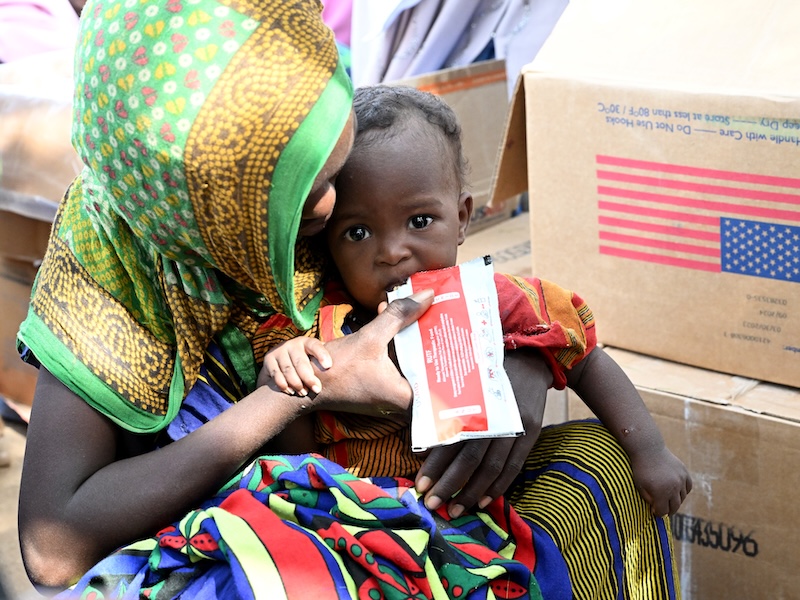
A malnourished 9-month-old baby receives nutritional supplements at a UNICEF mobile health center in one of the weredas in Elidar district, in northeastern Ethiopia. Photo © UNICEF/UNI623537/Dejongh
By David Braughton
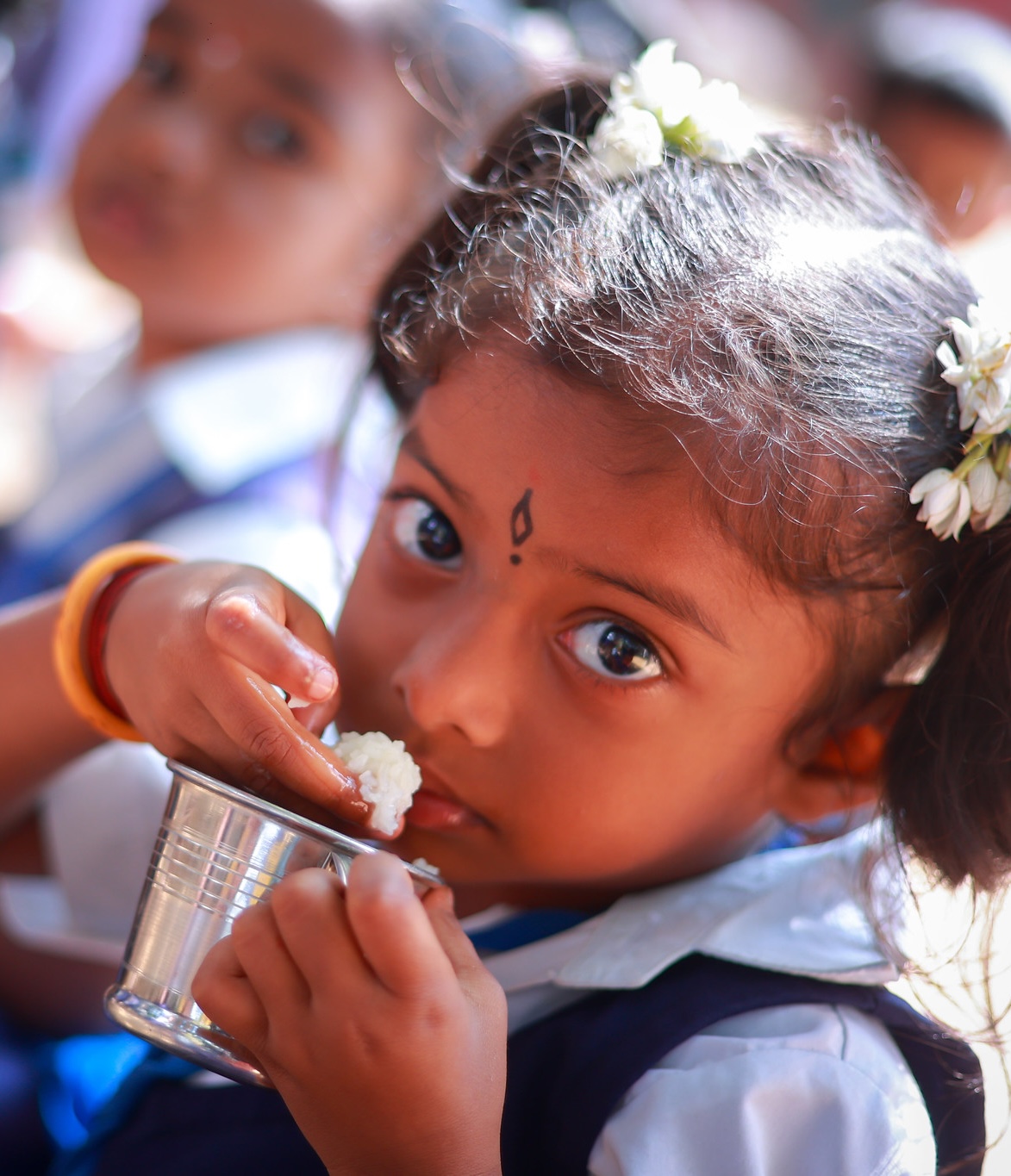
Look into the eyes of hunger, and chances are you will see a child staring back—too small for their age, their face worn and drained from living so long on the far side of hope. Now imagine a flood, war, or other disaster striking, tipping the scale from barely surviving to almost certain starvation.
Across today’s emergencies, the speed with which children and families move from subsistence to a fate far worse is terrifying. Global data show that children suffering from severe wasting face a twelve-fold higher risk of death than well-nourished children. When conflict or disaster strikes, that risk multiplies. In South Sudan, where 2.2 million children are acutely malnourished, outbreaks of measles, cholera, and hepatitis E push already fragile children into fatal conditions.
In Gaza, UNICEF reports one of the fastest deteriorations in child nutrition ever recorded, with acutely malnourished children more than doubling in months. When food systems collapse, children who were barely surviving can face starvation within weeks. This is the human reality behind every crisis alert BGR receives.
Recent events in South Asia also underscore just how quickly disaster can strike. This year’s monsoon rains triggered devastating floods and landslides across India. In Assam, floodwaters displaced hundreds of thousands of people and damaged homes, crops, and livelihoods, while Kerala and other regions endured similarly destructive rains.
But the emergency did not stop there. Farther north, catastrophic flooding along the Nepal–Tibet border destroyed homes, roads, bridges, and livelihoods, leaving thousands in urgent need of food and other essentials.
These are precisely the moments Buddhist Global Relief created its crisis response grants to meet: moments when resources must move quickly to organizations capable of reaching people before a crisis deepens. And every time we respond, we do so with careful attention to the urgency of the situation, the likelihood that our contribution will make a meaningful impact, and the resources we have available.
The numbers show how tight those resources have become. In FY2025, BGR awarded $445,000 in crisis response grants. In FY2026, the total fell by $104,000—more than 23 percent—to $341,000. This was not because BGR chose to cut back, but because our core funding could not stretch far enough to meet both our ongoing commitments and the rising number of emergencies.
These reductions came as humanitarian catastrophes continued to grow in both size and scope. At the same time, the U.S. government cut its aid by more than 25 percent from the prior year, placing even greater pressure on organizations like BGR to fill the gap. Choices must be made—but we cannot lose sight of their very real human consequences.
One way to understand those consequences is to translate dollars into food. The World Food Program USA estimates that a meal costs about 50 cents on average and that $75 can supply emergency food for a family of five for one month. By that measure, BGR’s $445,000 in FY2025 crisis response grants equaled roughly 890,000 meals—or one month of emergency food for nearly 30,000 people.
Now consider what the $104,000 decrease in FY2026 means. A difference of about $100,000 represents 200,000 meals, enough emergency food to sustain roughly 6,700 people for a full month.
These are not merely figures on a financial statement. They measure what additional resources can accomplish when the next plea for help arrives—and that plea will come.
Floods will come. Wars will uproot families. Droughts will ruin harvests. And in places where children are already living on the margins—as in South Sudan, Gaza, and so many other crisis zones—any shock can turn chronic hunger into a deadly emergency.
That future is already taking shape. Since July 1, 2026 (the start of BGR’s new fiscal year), we have committed $133,000 in crisis response assistance, including continued support for Feeding America and Better Burma, $7,000 for flood relief in India, $10,000 for Nepal, and $25,000 each through UNICEF USA for Ethiopia and the Democratic Republic of the Congo. That is almost 39 percent of what we had set aside in this fiscal year’s budget for an entire twelve months!
To free up more dollars so BGR can continue responding to new crises, we must first ensure our ongoing programs and commitments are fully sustained. Once we have met our core commitments, we can direct additional funds to immediate emergencies like those described above. But to do this, we need your help.
When I look into the eyes of hunger, I see a child—a child who, according to the Buddha’s teaching, may have been our mother or father, our son or daughter, in a previous life. She reaches out, asking us not to turn away but to share our abundance so that she and others like her may live another day. Our response will determine not only her fate, but also BGR’s ability to say Yes! when the next disaster strikes. Please help us say Yes! as often as possible by donating now.
David Braughton is vice-chair of the Board of Buddhist Global Relief.