Under Cambodian law, children under the age of 3 can live in prisons with their mothers. Children experience difficult prison conditions at a crucial point in their development. Pregnant women are not provided with pre- and post-natal care and are often forced to return to prison one day after giving birth. LICADHO, the Cambodian League for the Promotion and Defense of Human Rights, BGR’s partner in this project, monitors the rights and welfare of pregnant women and children living with their mothers in nineteen Cambodian prisons.
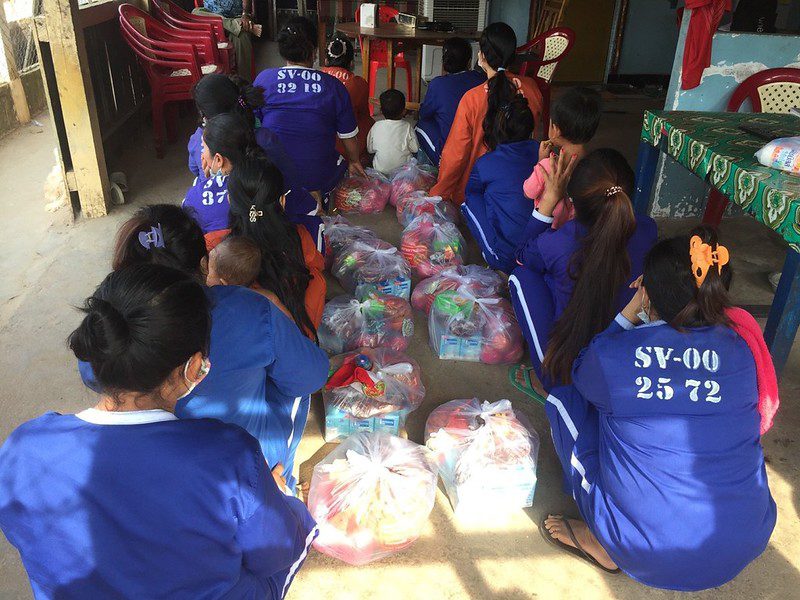
The Early Years Behind Bars (EYBB) project provides nutritious food and material support to mothers, children, and pregnant women detained in prisons—from nutrition-rich foods like soy milk and fruit to hygiene materials such as menstrual pads, natural soap, laundry detergent, and toothpaste. This year’s project will provide necessities for 100 infants, 75 girls and adolescent females, and 150 mothers and pregnant women. This project also supports LICADHO’s Prison Nutrition Program, through which a prison medical team provides additional nutritional aid to more than 4,800 at-risk patients.
Under Cambodian law, children under the age of 3 can live in prisons with their mothers. Children experience difficult prison conditions at a crucial point in their development. Pregnant women are not provided with pre- and post-natal care and are often forced to return to prison one day after giving birth. LICADHO, the Cambodian League for the Promotion and Defense of Human Rights, BGR’s partner in this project, monitors the rights and welfare of pregnant women and children living with their mothers in nineteen Cambodian prisons.
The Early Years Behind Bars (EYBB) project provides nutritious food and material support to mothers, children, and pregnant women detained in prisons—from nutrition-rich foods like soy milk and fruit to hygiene materials such as menstrual pads, natural soap, laundry detergent, and toothpaste. This year’s project will provide necessities for 100 infants, 75 girls and adolescent females, and 150 mothers and pregnant women. This project also supports LICADHO’s Prison Nutrition Program, through which a prison medical team provides additional nutritional aid to more than 4,800 at-risk patients.