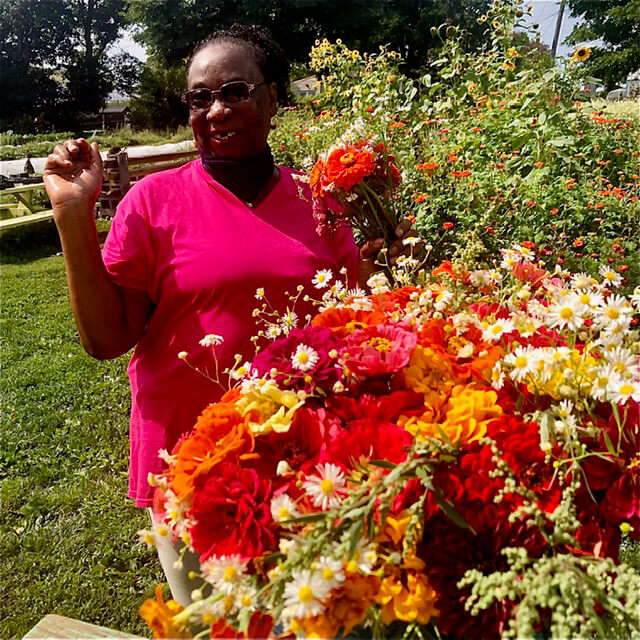
The Easton Urban Farm, operated by the Easton Area Neighborhood Centers, is a 5/8-acre plot on which community volunteers grow vegetables, fruits, and seedlings for distribution to low-income residents of the city of Easton, Pennsylvania. In addition to providing an estimated 7,000 pounds of nutritious, locally grown produce to food-insecure families each year, the farm also teaches volunteers and other community members how to grow produce in any setting, including planters, backyards, and community gardens.
Food insecurity affects many residents of the Easton area, and the situation has been exacerbated by the health, financial, and emotional impacts of the pandemic. To get by, many families have become even more dependent on highly processed food items that are not healthy. The Farm distributes nutritional vegetables and fruits from its harvests to families in need. The organization also offers personal hygiene items, diapers, and paper goods through the food pantry. This year’s project will support the growing of produce as well as the resumption of educational and internship programs following closure due to the pandemic. The project is expected to directly benefit 1,390 people, in addition to the estimated 70 households a week that receive produce through the Vegetables in the Community program. Annually renewable project.
The Easton Urban Farm, operated by the Easton Area Neighborhood Centers, is a 5/8-acre plot on which community volunteers grow vegetables, fruits, and seedlings for distribution to low-income residents of the city of Easton, Pennsylvania. In addition to providing an estimated 7,000 pounds of nutritious, locally grown produce to food-insecure families each year, the farm also teaches volunteers and other community members how to grow produce in any setting, including planters, backyards, and community gardens.
Food insecurity affects many residents of the Easton area, and the situation has been exacerbated by the health, financial, and emotional impacts of the pandemic. To get by, many families have become even more dependent on highly processed food items that are not healthy. The Farm distributes nutritional vegetables and fruits from its harvests to families in need. The organization also offers personal hygiene items, diapers, and paper goods through the food pantry. This year’s project will support the growing of produce as well as the resumption of educational and internship programs following closure due to the pandemic. The project is expected to directly benefit 1,390 people, in addition to the estimated 70 households a week that receive produce through the Vegetables in the Community program. Annually renewable project.