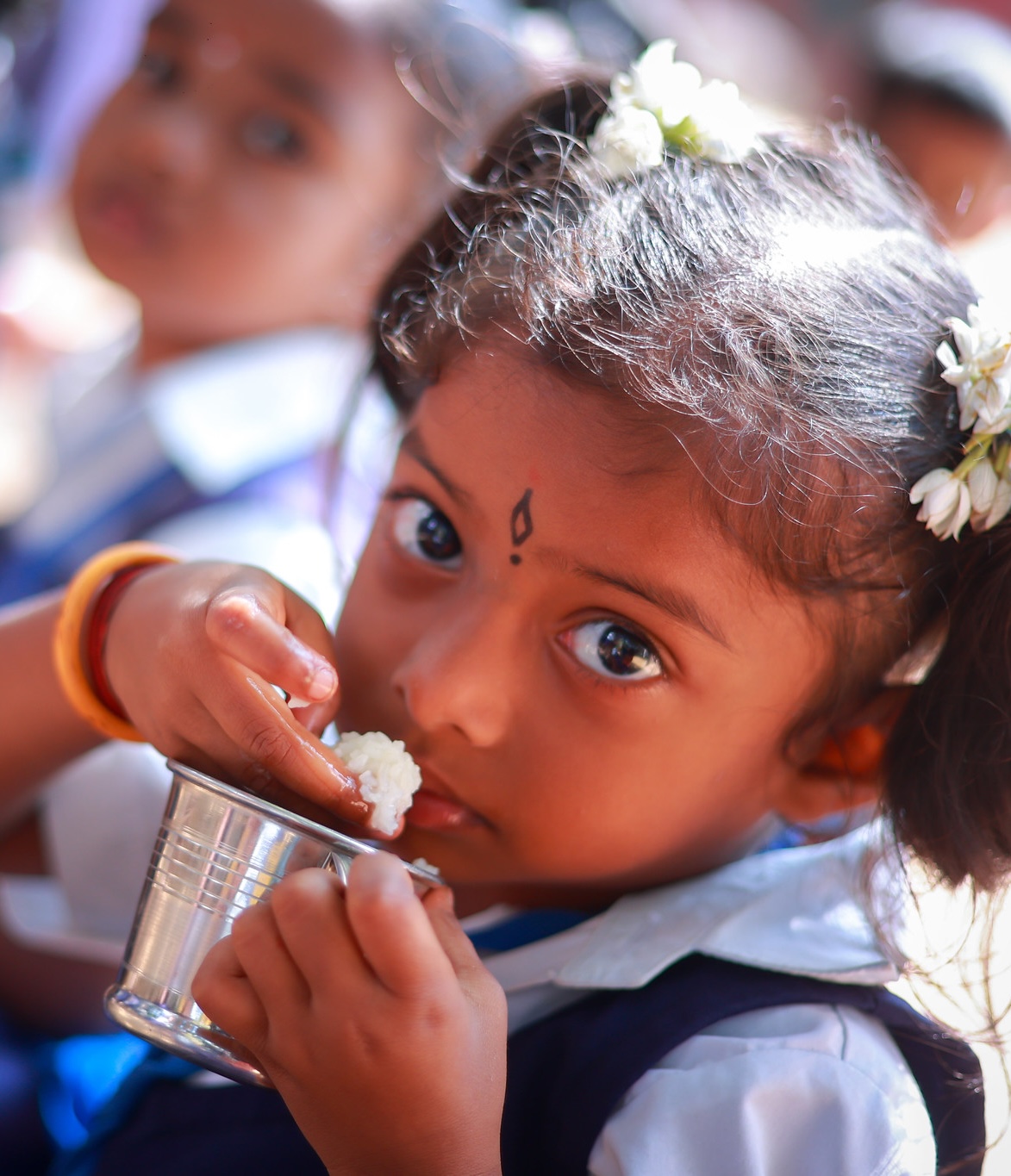
Women perform 80 percent of agricultural labor in Siddharthnagar district in Uttar Pradesh, cultivating an iron- and zinc-rich heritage rice variety, yet families here cannot afford to eat their own nutritious harvest, as middlemen claim upwards of 60 percent of the value. The growers must sell their heritage rice at a steep discount and then purchase cheaper, nutrient-poor rice for hope consumption, leading to undernutrition for their families. As a result, 61 percent of women suffer from anemia, and nearly 40 percent of children experience nutrition insecurity to the point of stunting in Uttar Pradesh.
Through its Project Bodhigram, new BGR partner Shohratgarh Environmental Society (SES) seeks to address the prevalence of anemia and stunting, as well as the exploitation by middlemen. The project operates in four parts: First, it provides training in sustainable agriculture, seed preservation, and organic certification for 100 women, including a mandatory 20 percent home-retention policy to ensure that families are able to consume the nutrient-rich rice they grow. Second, the project establishes a processing unit creating products including cookies, bread, and sweets for sale in premium urban markets. Third, the project clears a path to bypass middlemen through the operation of facilities for sorting, cleaning, grading, and packaging the rice, improving farmers’ income by 100–200 percent. Finally, the project provides training and supplies for farmers to cultivate and process the iron- and calcium-rich plant moringa oleifera for home nutrition and for revenue generation. The project will directly benefit 200 women and will improve nutrition security for an estimated 3,000 additional people.
Women perform 80 percent of agricultural labor in Siddharthnagar district in Uttar Pradesh, cultivating an iron- and zinc-rich heritage rice variety, yet families here cannot afford to eat their own nutritious harvest, as middlemen claim upwards of 60 percent of the value. The growers must sell their heritage rice at a steep discount and then purchase cheaper, nutrient-poor rice for hope consumption, leading to undernutrition for their families. As a result, 61 percent of women suffer from anemia, and nearly 40 percent of children experience nutrition insecurity to the point of stunting in Uttar Pradesh.
Through its Project Bodhigram, new BGR partner Shohratgarh Environmental Society (SES) seeks to address the prevalence of anemia and stunting, as well as the exploitation by middlemen. The project operates in four parts: First, it provides training in sustainable agriculture, seed preservation, and organic certification for 100 women, including a mandatory 20 percent home-retention policy to ensure that families are able to consume the nutrient-rich rice they grow. Second, the project establishes a processing unit creating products including cookies, bread, and sweets for sale in premium urban markets. Third, the project clears a path to bypass middlemen through the operation of facilities for sorting, cleaning, grading, and packaging the rice, improving farmers’ income by 100–200 percent. Finally, the project provides training and supplies for farmers to cultivate and process the iron- and calcium-rich plant moringa oleifera for home nutrition and for revenue generation. The project will directly benefit 200 women and will improve nutrition security for an estimated 3,000 additional people.