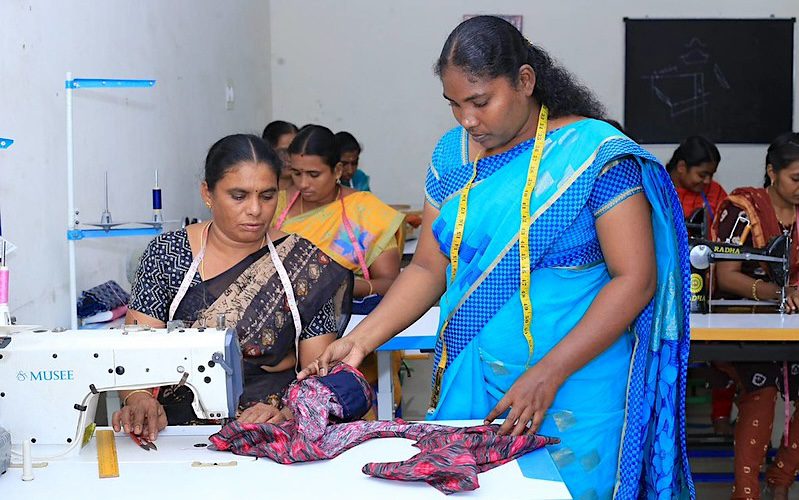
Women participate in a vocational training project with BGR partner Rosary Prayer Society in India.
By BGR Staff
This spring, BGR’s Board approved 58 projects that will provide food, children’s education, vocational training for women, and sustainable agriculture support for thousands of people in need in 22 countries around the world. Funding to support the upcoming year’s projects exceeded $1.3 million—all made possible by the generosity of our donors.
At the 2026 BGR Projects meeting, held over the weekend of April 25–26, the Buddhist Global Relief Board and staff reviewed and approved 58 project proposals from partners in 22 countries for the 2026 project year, which runs from July 1, 2026 through June 30, 2027. The approved projects will relieve hunger, educate children, provide vocational opportunities and training for vulnerable women, and support sustainable agriculture among smallholder farmers in Bangladesh, Brazil, Cambodia, Cameroon, Côte d’Ivoire, Haiti, India, Jamaica, Kenya, Malawi, Mongolia, Mozambique, Myanmar, Nicaragua, Peru, South Africa, Sri Lanka, Tanzania, Thailand, Uganda, and here in the United States.
Once again this year we were joined for part of the meeting by Board members from BGR’s European sister organization, Mitgefühl in Aktion (MiA), which is cosponsoring three projects with BGR this year: a girls’ home and community center in India; a feeding program for preschool-age children in Sri Lanka; and a rice support project for girls and young women in Cambodia.
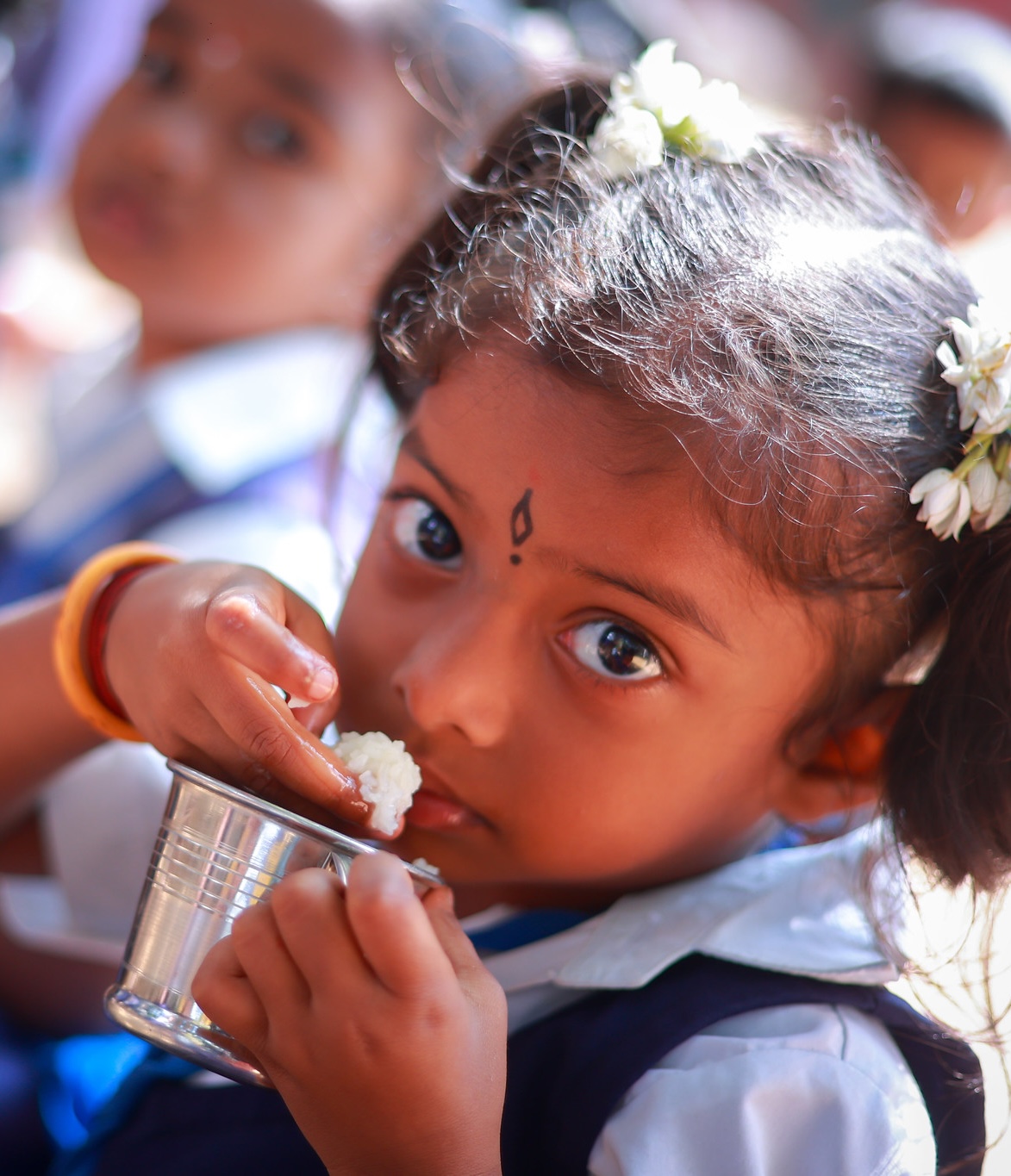
A majority of BGR’s projects are renewable projects with existing partners. These projects have proven to be successful and aligned with BGR’s mission of fighting hunger, supporting sustainable agriculture, educating children—especially girls—and providing opportunities for women to start livelihood projects to support their families.
This year, the Board welcomed two new partners, Mulheres da Parada in Brazil and Shohratgarh Environmental Society in India. The Board also approved new projects from two existing BGR partners, CARE and the Rosary Prayer Society.
Solidarity Market to Increase Food Security in Brazil
New BGR partner Mulheres da Parada (MP) serves families facing extreme socioeconomic vulnerability in the Parada São Jorge community in São Gonçalo, Rio de Janeiro. Persistent food and nutritional insecurity are a tremendous obstacle here, particularly for women heads of household and survivors of violence.
This project supports MP’s Solidarity Market (Mercadinho Solidário), which provides meals, essential goods, and social assistance to underserved women in Parada São Jorge. BGR contributions will ensure food security for 60 families for six months and will engage at least 80 women in economic autonomy pathways.
Addressing Nutrition Insecurity, Anemia, and Stunting among Farming Families in India
Women perform 80 percent of agricultural labor in Siddharthnagar district in Uttar Pradesh, cultivating an iron- and zinc-rich heritage rice variety, yet families here cannot afford to eat their own nutritious harvest, as middlemen claim upwards of 60 percent of the value. The growers must sell their heritage rice at a steep discount and then purchase cheaper, nutrient-poor rice for home consumption, leading to undernutrition for their families. As a result, 61 percent of women in Uttar Pradesh suffer from anemia, and nearly 40 percent of children experience nutrition insecurity to the point of stunting.
Through its Project Bodhigram, new BGR partner Shohratgarh Environmental Society seeks to address the prevalence of anemia and stunting, as well as the exploitation by middlemen. The project operates in four parts: First, it provides training in sustainable agriculture, seed preservation, and organic certification for 100 women, including a mandatory 20 percent home-retention policy to ensure that families are able to consume the nutrient-rich rice they grow. Second, the project establishes a processing unit creating products including cookies, bread, and sweets for sale in premium urban markets. Third, the project clears a path to bypass middlemen through the operation of facilities for sorting, cleaning, grading, and packaging the rice, improving farmers’ income by 100–200 percent. Finally, the project provides training and supplies for farmers to cultivate and process the iron- and calcium-rich plant moringa oleifera for home nutrition and for revenue generation. The project will directly benefit 200 women and will improve nutrition security for an estimated 3,000 additional people.
Support for Early Childhood Development in Mozambique
In Inhambane Province in Mozambique, droughts, erratic rainfall, flooding and storms have disrupted agricultural production and reduced access to safe water, undermining families’ ability to meet their children’s basic needs. This new project with longtime BGR partner CARE provides emergency food assistance and clean water for 1,225 people, focusing on children under 5 years of age. The project will also support the construction of safe, stimulating play spaces for young children who are in the care of elderly grandmothers and other caregivers while their parents are working locally or abroad.
Women’s Empowerment through Vocational Training and Skill Development in India
Undrajavaram Mandal in Andhra Pradesh is a rural area with limited economic opportunities, particularly for women. Girls and young women lack access to education and vocational training, and caste principles broadly limit opportunities for improving their livelihoods. This new project with BGR partner the Rosary Prayer Society is a women-led menstrual health and livelihood initiative to address the critical gaps in menstrual hygiene access and economic opportunity faced by women and adolescent girls in 15 villages of Undrajavaram Mandal.
The project establishes a local production and training unit producing low-cost, hygienic, safe, biodegradable sanitary napkins that are affordable for poor households and readily accessible within the villages. Four women will be directly employed in the initiative, while many more local women will participate in distribution, outreach, and awareness activities. To address the social and cultural barriers surrounding menstruation, the project will also conduct regular menstrual health and hygiene awareness sessions in villages and schools. The project will provide hygiene education and menstrual health products to more than 47,000 women and adolescent girls.
BGR expresses its deepest gratitude to all its generous donors who allow us to continue our work of helping to relieve the suffering of the most vulnerable among us. May the fruits of our work together be a light in the world, a source of ease, hope, and nourishment for those whom we serve.