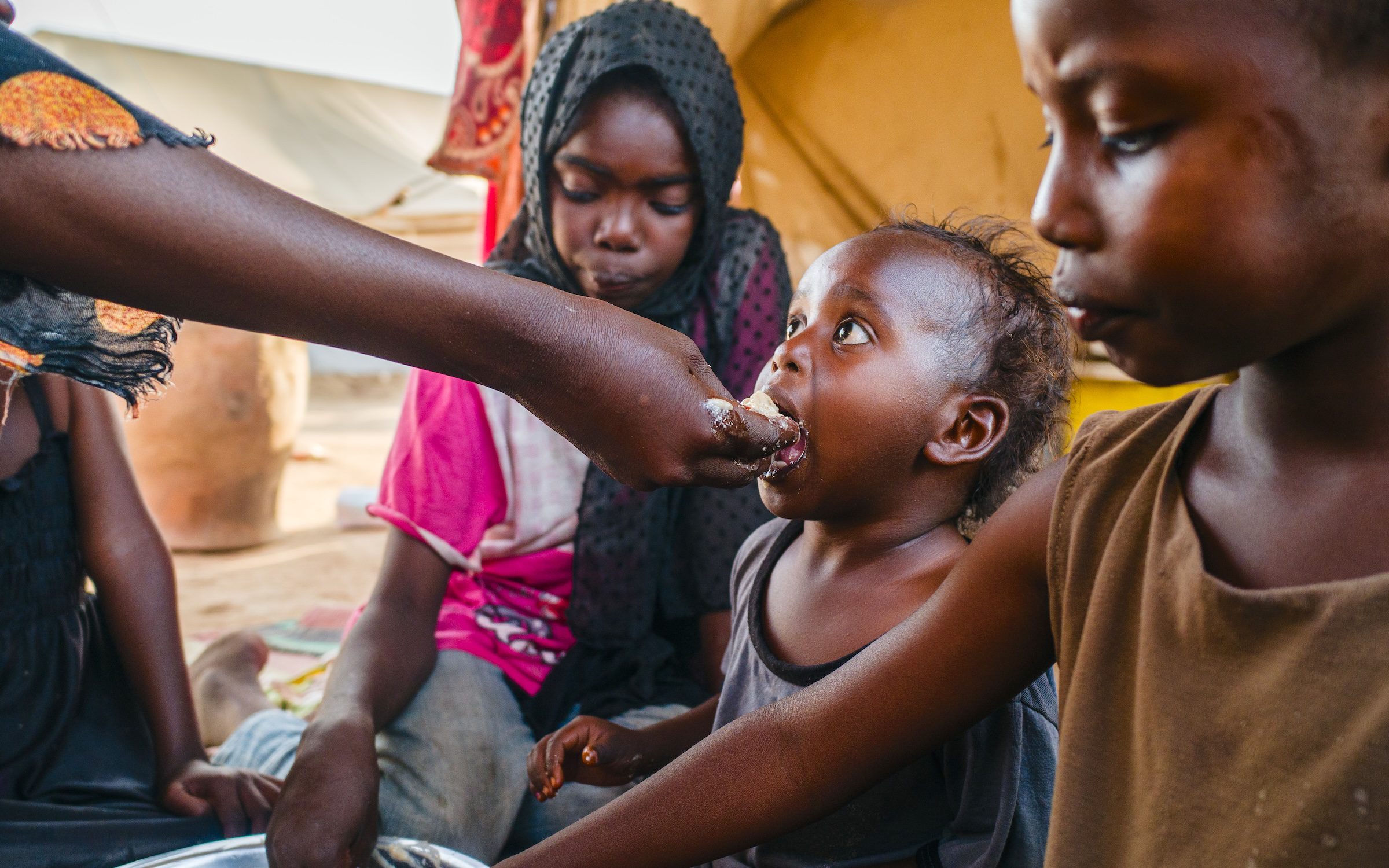
A woman serves her daughters with porridge made from ingredients provided by the World Food Programme’s General Food Assistance program, which is currently assisting over 600,000 internally displaced individuals in the city of Kassala, Sudan. Photo © WFP/Abubakar Garelnabel
By Shae Davidson
In February, the Board of Buddhist Global Relief approved emergency grants to UNICEF USA and the World Food Program USA to provide urgently needed meals, health screenings for children, aid for water and sanitation projects, and support for school nutrition programs in Afghanistan, Burkina Faso, the Democratic Republic of the Congo, Ethiopia, and Sudan. BGR approved the crisis funding—which will allow the World Food Programme (WFP) and UNICEF to help thousands of people—in response to budget shortfalls created by cruel cuts in humanitarian funding.
This aid has become all the more important as new and ongoing conflicts drive families from their homes and disrupt food systems. The increasing effects of the climate crisis have further strained farms and water resources. The programs will support children and families in “hunger hotspots” identified by WFP and the Food and Agriculture Organization as well as in other areas facing extreme crises.
Sudan is one of the sites of “highest concern” for WFP. Over 12 million people have been displaced by fighting, and more than 21 million Sudanese face acute hunger. Due to funding shortfalls, the program fears that their emergency food stocks will run out by the end of March.
Outbreaks of disease and the worsening effects of climate change have compounded the issues facing the Democratic Republic of the Congo. Decades of conflict and poverty have displaced millions of people and made children vulnerable to exploitation and violence. Despite UNICEF’s close collaboration with local partners, calls for financial support for health and nutrition programs reached only 13 percent of their goals for 2025.
In Burkina Faso, WFP has worked closely with schools serving displaced families to offer nutritious meals to students and distribute food rations to their parents. Staff members have also helped schools cultivate local gardens. Unfortunately, climate change and increased violence in the Sahel have fueled food insecurity.
Families in Ethiopia face challenges finding food due to a cycle of drought and flooding that has devastated farming. Disease, displacement, and violence have increased pressure on health and water systems, disrupting the lives of families already at risk. UNICEF has worked to treat malnutrition and improve water quality, as well as support community-based mental health services as a way to improve protective factors for children. Funding cuts threaten to severely limit the reach of their efforts.
Decades of war and repression have drained the resiliency of the Afghan people. Families faced increased challenges in 2025 as drought disrupted farming in more than half of the county and earthquakes in August and November damaged roadways, schools, and health centers. The brutally harsh winter of 2025–2026 increased the strain on food stores.
The United Nations’ emergency food programs emerged from efforts to meet the urgent needs of people facing hunger and want at the end of World War II. Driven to help alleviate the suffering caused by the upheavals of the 1930s and 1940s and inspired by a vision of a hopeful future, the United States played a key role in this campaign. Unfortunately, recent decisions to gut the U.S. Agency for International Development (USAID) and to cut other federal support for aid programs have left humanitarian groups scrambling to find new funding. (Read more about the defunding of USAID here.)
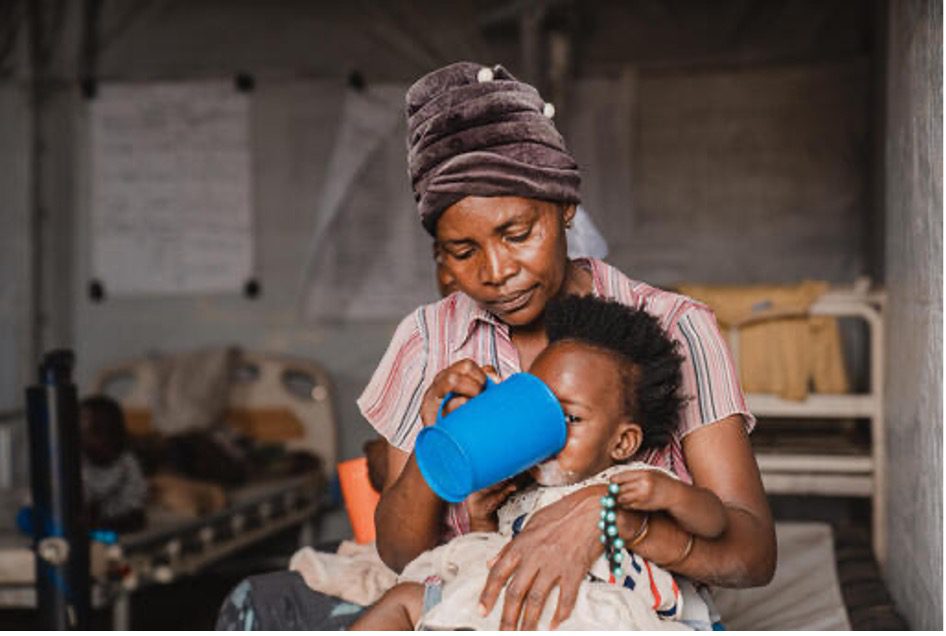
Vanessa, 3, suffering from malnutrition, drinks therapeutic milk in the arms of her mother Sifa at the UNICEF-supported Nyiragongo General Hospital in North Kivu province, Democratic Republic of the Congo. © UNICEF/UNI639942/Benekire
As administrators work to secure new funding, workers have had to face harsh choices. In Sudan, the funding shortfall has forced local organizers to cut programming in a desperate effort to support communities facing the direst conditions. WFP workers in Afghanistan had just completed an emergency campaign to help people affected by the harsh winter, only to find themselves facing the possibility of cutting services to infants and new mothers due to a lack of funding.
These actions also force the most impoverished families to make impossible decisions. Should we leave our homes and face unknown violence and hardship on the chance our lives will be better? Should we pull our children from school so they can work to help support our family? Which child do I feed today?
Crisis funding from BGR will not replace the resources that have been lost by UNICEF and WFP due to the cuts in U.S. contributions. The support, however, will help families facing hunger, fear, and illness and serve as an example of the power of collaborative compassionate action in a world threatened by greed and hatred.
BGR Board member Shae Davidson completed a Ph.D. in U.S. History at Ohio University, with research exploring the importance of inclusive community partnerships in building food systems. His past experience includes serving as a museum director, a humanities instructor, and a researcher. Shae currently works at a nonprofit that supports survivors of gender-based violence.