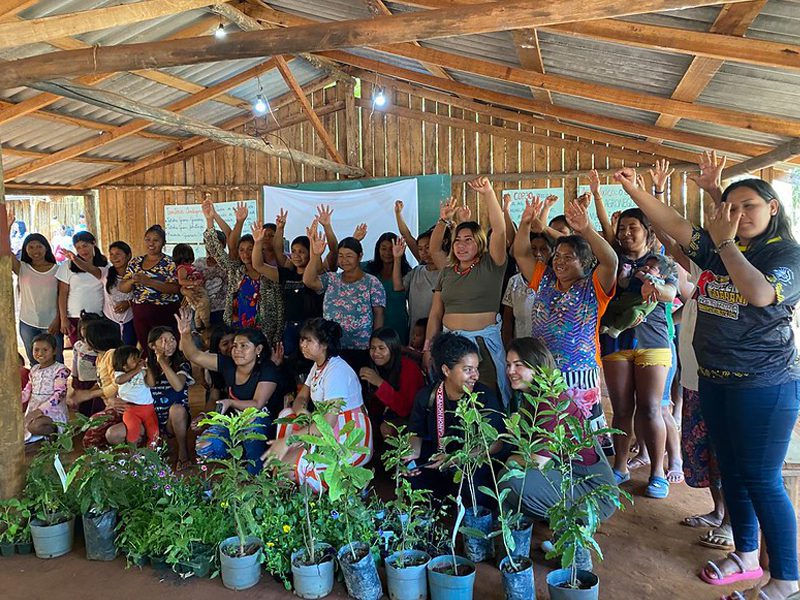
The Guarani are traditional peoples of the Brazilian Atlantic Forest and live in villages scattered throughout southern Brazil and neighboring countries. Centuries of colonization have resulted in the loss or degradation of much of their historic territory. Today, the Guarani are working to restore these lands, through planting and reforestation projects. This project with BGR partner Centro de Trabalho Indigenista (CTI) will support the cultivation of traditional crops cultivated for millennia by the Guarani people, providing a healthy diet for their bodies and spirits.
In addition to supporting food-crop planting efforts in eight focal regions, the project provides opportunities for intergenerational knowledge-sharing. The project encourages the direct cultivation of traditional and chemical-free species, thus increasing biodiversity in the territory and supporting the struggle for food autonomy. A meliponiculture workshop focused on the native Jataí bee species will disseminate traditional knowledge about the native bees and the uses of honey in the Guarani culture, combined with modern beekeeping practices already used by some communities in the territory. Approximately 416 people will be directly involved in these trainings, and the entire Tekoha Guasu Guavirá Indigenous Territory, across its 25 villages, will benefit indirectly.
The Guarani are traditional peoples of the Brazilian Atlantic Forest and live in villages scattered throughout southern Brazil and neighboring countries. Centuries of colonization have resulted in the loss or degradation of much of their historic territory. Today, the Guarani are working to restore these lands, through planting and reforestation projects. This project with BGR partner Centro de Trabalho Indigenista (CTI) will support the cultivation of traditional crops cultivated for millennia by the Guarani people, providing a healthy diet for their bodies and spirits.
In addition to supporting food-crop planting efforts in eight focal regions, the project provides opportunities for intergenerational knowledge-sharing. The project encourages the direct cultivation of traditional and chemical-free species, thus increasing biodiversity in the territory and supporting the struggle for food autonomy. A meliponiculture workshop focused on the native Jataí bee species will disseminate traditional knowledge about the native bees and the uses of honey in the Guarani culture, combined with modern beekeeping practices already used by some communities in the territory. Approximately 416 people will be directly involved in these trainings, and the entire Tekoha Guasu Guavirá Indigenous Territory, across its 25 villages, will benefit indirectly.