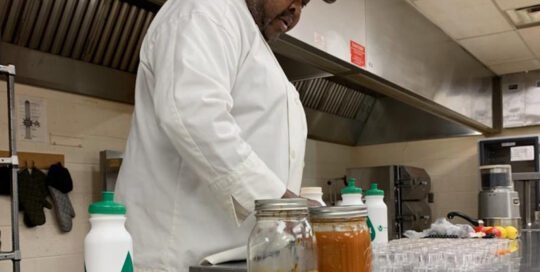
In 2024, more than two-thirds of households in Detroit, Michigan, experienced food insecurity, and 30,000 residents lacked access to full-service grocery stores and therefore to readily obtained fresh food. Furthermore, grocery prices in the U.S. have increased by 23.6 percent over the past four years, putting additional financial pressure on many families. To respond to

Community Resilience Through Urban Farming in Easton, Pennsylvania 2025
Patricia Brick2026-10-22T07:05:26-07:00The Easton Urban Farm, operated by the Easton Area Neighborhood Center, is a 5/8-acre plot on which community volunteers grow vegetables, fruits, and seedlings for distribution to low-income residents of the city of Easton, Pennsylvania. In addition to providing over 10,000 pounds of nutritious, locally grown produce to food-insecure families each year, the farm also teaches
Food for Low-Income Children and Families in Pima County, Arizona 2025
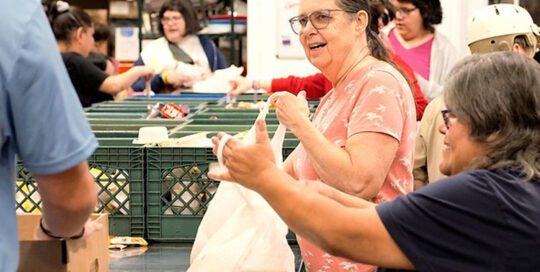
Patricia Brick2026-10-22T07:05:39-07:00BGR partner the Sahuarita Food Bank and Community Resource Center serves the low-income population of southeastern Pima County, Arizona, a mostly rural area. This project will address poverty in Summit, Arizona, a small community with a household poverty rate of 32 percent, the lowest income rural community in Arizona, where many live without electricity or water and

After-School and Summer Meals Program in Washington, D.C. 2025
Patricia Brick2026-10-22T07:05:50-07:00In one of the wealthiest countries in the world, there are populations disproportionately impacted by poverty, geography, and unequitable health, behavioral, and academic outcomes. In the Greater Washington, D.C., region, 37 percent of the population is food insecure, including one in ten children. Persistent childhood food insecurity can lead to chronic health issues such as asthma,

Lunch Program for High-School Students in Uganda 2025
Patricia Brick2026-10-22T07:06:01-07:00In the fishing communities near Entebbe, Uganda, many families face poverty, poor nutrition, familial instability, and limited access to education. Under the guidance of founder and abbot the Most Venerable Bhante Buddharakkhita, Uganda Buddhist Centre (UBC) has founded an African Buddhist High School program offering academic instruction and vocational training to high-school students from under-resourced families
Hunger Relief and Education for Orphans in Uganda 2025
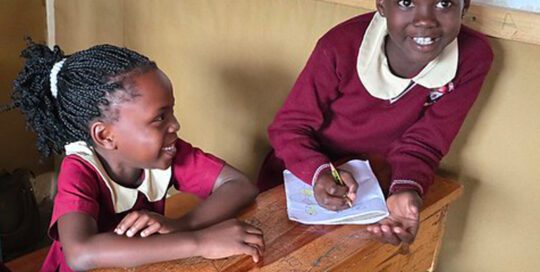
Patricia Brick2026-10-22T07:06:14-07:00In the village of Bulega in southern Uganda, BGR partner Uganda Buddhist Centre (UBC) has established a feeding program to care for some of the many children here who have been orphaned due to parental HIV/AIDS or other illnesses, accidents, abandonment, or conflict-related violence. The orphaned children are at significant risk of maltreatment, exploitation, and sexual and
Women’s Livelihoods and Climate-Smart Agriculture in Uganda 2025
Patricia Brick2026-10-22T07:06:29-07:00In the rural Zombo District of Uganda, more than 90 percent of residents depend on small-scale agriculture for their livelihoods; a majority of these farmers are women who rely on agricultural production to feed their families and earn income by selling crops at local markets. Land degradation, poor soil health, and high dependence on rain-fed
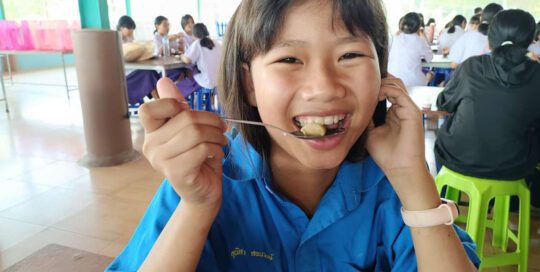
Meals for Underserved Children in Thailand
Patricia Brick2026-10-22T07:06:41-07:00Dhammajarinee Witthaya School in Pak Thao, Thailand, serves students from highly vulnerable backgrounds, with 95 percent of students coming from broken and troubled homes.. Roughly 40 percent of the girls who attend the school have been orphaned or abandoned, and 80 percent have grown up below the poverty line. Education gives girls a chance to avoid
Supporting Children Orphaned by HIV/AIDS in Tanzania 2025
Patricia Brick2026-10-22T07:06:53-07:00Tanzania is home to 1.7 million people who have been affected by HIV/AIDS, with more than a million children (ages infant to 17 years) orphaned because of this disease. Tanzania’s Mbeya region is home to the highest concentration of these children. BGR partner Mercy World Organization is supporting these children, providing food to children who previously received
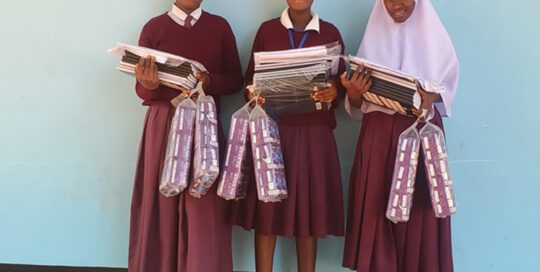
Supporting Girls’ Education in Tanzania 2025
Patricia Brick2026-10-22T07:07:05-07:00Tanzania has one of the highest rates of out-of-school children in upper secondary school in the world—a recent UNESCO report estimates that 87 percent of children in that age group are currently not in school. Financial barriers to keeping girls in school include the costs of school fees, uniforms, sanitary wear, and transportation or accommodation, as